 NABH Accredited

Hirschsprung's Disease
Diagnosis, surgical planning and follow-up for children with Hirschsprung's disease and related bowel concerns.
What Is Hirschsprung's Disease?
Hirschsprung's disease is a congenital bowel condition in which nerve cells are missing from part of the large intestine. Without these nerve cells, the affected bowel cannot move stool normally, leading to blockage or severe constipation.
Signs and Symptoms
- Failure to pass the first stool within the expected time after birth.
- Swollen abdomen, green vomiting or feeding difficulty in a newborn.
- Persistent constipation or difficulty passing stool.
- Poor weight gain or repeated abdominal distension.
- Fever, diarrhoea, lethargy or sudden worsening that may indicate bowel infection and needs urgent care.
Diagnosis and Treatment
Evaluation may include abdominal imaging, a contrast study and rectal biopsy to confirm whether nerve cells are absent. Treatment usually involves surgery to remove or bypass the affected bowel and connect healthy bowel to the anus. The operation may be completed in one stage or planned in stages depending on the child's age, health and bowel condition.
How Yerra's Superspeciality Hospital Helps
Dr. Yerra Rajesh evaluates suspected Hirschsprung's disease, plans appropriate investigations and discusses the surgical approach with the family. Care continues after surgery to monitor bowel movements, nutrition, wound healing and recovery.
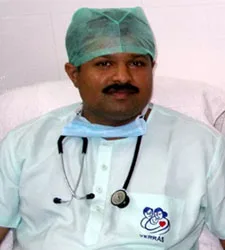
Dr. Yerra Rajesh
M.S., M.Ch., MRCS
Managing Director | Paediatric, Neonatal and Paediatric Urology Surgeon
View ProfileSpeak to our team
Call the hospital to discuss Hirschsprung's Disease or to arrange a consultation.
0863-222-3181 Book an AppointmentBring your records
Previous prescriptions, laboratory reports, scan images and antenatal reports help the doctor understand the condition and avoid repeating investigations.